Exploring Romania’s wild and vast Carpathian Mountains will be a unique and memorable experience for tourists who don’t know what to expect. Romania has a lot of potential for hiking, trekking, backpacking trips, mountain biking, climbing, and all things outdoors – even though it’s a less known destination for this. Which is exactly why you should consider visiting Romania for your next hiking vacation!

Boasting a wide variety of hiking trails that wander through stunning natural landscapes, majestic peaks reaching 2,500m altitudes, dense woodlands, plenty of natural attractions, quaint little villages still unspoiled by the touch of the modern world and a rich wildlife population, Romania rightfully deserves the title Europe’s last wilderness reserve.

The Carpathian Mountains dominate the country’s relief and circle the famous region of Transylvania which is a popular destination for tourists all over the world. So for those of you who want to go hiking in Romania, explore the Carpathians and discover the wonders of Mother Nature – we’ve got you covered. In this article we’ll tell you about three places you can go hiking in Romania and how to plan your trip.

Hiking in Piatra Craiului Natural Park
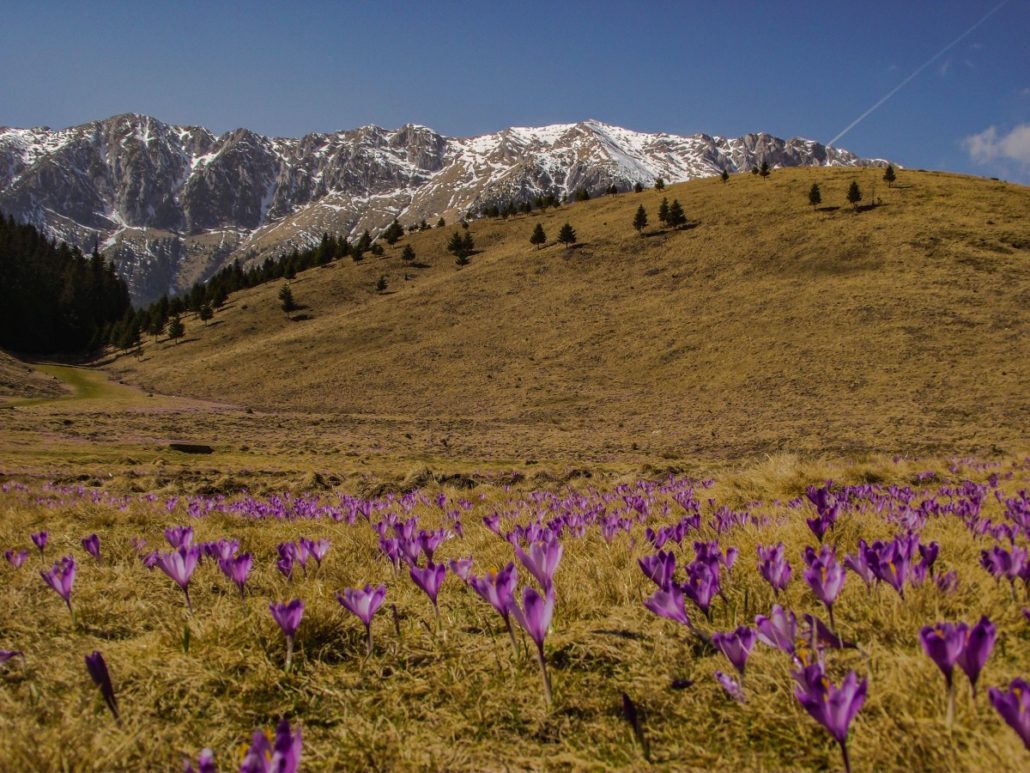
Piatra Craiului Natural Park Romania - hiking trails for all experience levels

Piatra Craiului Natural Park – hiking trails for all experience levels


Rising at the eastern extremity of the Southern Carpathians, Romania’s Piatra Craiului mountains are a favourite among hikers and climbers for the best hikes in Romania.

This range might not be the largest, nor the highest (the maximum altitude is reached at La Om Peak at 2,238m altitude) in Romania, but what really captivates hikers are the distinctively rigged limestone summits which are unlike any other mountains in the area. The unique crest scratches the sky like a natural barrier and magically draws hikers – and all eyes – to it.

The mountains in Piatra Craiului also boast rich vegetation and animal life which is why it’s also a natural park. Enjoy some of the best hikes in Romania while taking in stunning scenery.

There are plenty of trails in Piatra Craiului for all experience levels. They’re perfect for hiking day trips for medium experienced hikers or for family trips with kids.

If you’re a beginner, the best option would be following the trail that takes you from Fântâna lui Botorog, all the way through the Zarnesti Gorges, with spectacular vertical walls bordering the valley (which are also popular for rock climbing), continues towards Cheia Pisicii, and ends at Valea Vlădușca. It’s a 6 hours trail in general, but it really depends on your pace and how many stops you make along the way.

You can also check out the trail that goes uphill to Curmatura Hut (the only accommodation in the mountains) also starting from Fântâna lui Botorog. The hike takes just under three hours and is available all year round.

You’ll begin your ascension following the indicators on the left side of the fountain, through the forest, until you reach Poiana Zanoaga. Here’s where the path splits in two, and you’ll have to follow the yellow markings until you’ve finally reached Cabana Curmatura, a beautiful mountain chalet that also serves as a starting point for the trails going up the ridge of Piatra Craiului.

If you’re looking for more challenging trails towards the ridge or even to summit La Om Peak, these can be done in one-day hikes of approximately 8-10h starting from Pestera village.

These hiking trails in Romania are recommended for experienced mountaineers able to sustain effort and a quick pace, and we would recommend hiring a hiking guide as it’s easy to get lost especially in the evening as it gets dark. Besides the challenge, you’ll be rewarded with stunning views of the Rucar-Bran Corridor and Bucegi Mountains if the weather is on your side.

Hiking in Bucegi Mountains
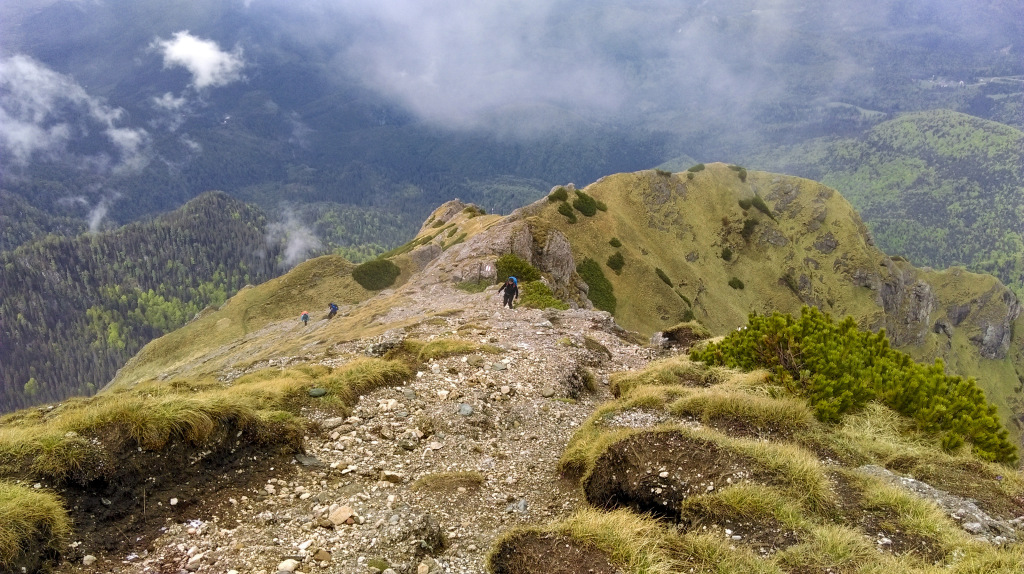
Bucegi hiking in Romania's Southern Carpathian Mountain range

Bucegi hiking in Romania’s Southern Carpathian Mountain range

Hiking trips in Romania’s Bucegi mountains are also very popular due to the massif’s proximity to Bucharest and the existence of cable cars in Sinaia and Busteni taking people up to the plateau and offering a very easy start to any hiking trip. It’s a two-hour trip to Bucegi from the capital and less than an hour from Brasov by either car or by train.

But it’s not just accessibility that makes Bucegi Mountains such an appealing hiking destination in Romania. The striking glacial landforms such as Valea Morarului, Padina Crucii, or Tiganesti glacial lake, the famous natural rock formations Babele and The Sphinx, the breathtaking views from Omu Peak at 2,505m altitude and the numerous circuit trails contribute to its reputation as one of the best hiking areas in Romania.

The town of Busteni, located in Prahova Valley, marks the starting point for most hiking trails in Bucegi, Romania. The cable cars from Busteni or Sinaia will take you straight to the Bucegi plateau at 2,200m altitude.

Once you’ve reached the plateau, you can continue your trip and visit well-known natural attractions such as The Sphinx and Babele rock formations, Bolboci Lake and Caraiman Cross where you’ll get superb views and, if lucky and the sky is clear, see the Black Sea 350 km away!
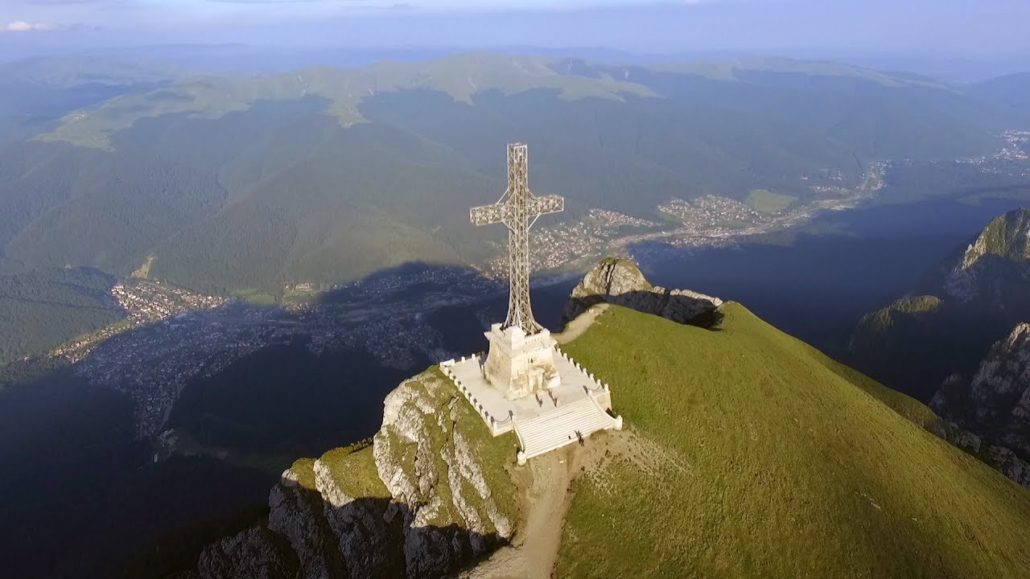
Heroes' Cross on Caraiman Peak with its spectacular view over the Carpathian Mountains

Heroes’ Cross on Caraiman Peak with its spectacular view over the Carpathian Mountains

Since Bucegi is quite a compact massif, you can cover multiple hiking trails on the same day. From Babele, you can easily reach Omu Peak after only a 3-hour hike one-way, or head towards Crucea Caraiman, following the red cross markings.

Compared to some of the other best hikes in Romania, both of these treks are very easy, even for inexperienced hikers, so you don’t need any special gear apart from adequate footwear and clothing.

One thing you should keep in mind when planning a hike in the Bucegi Mountains is the popularity of the mountain resorts at their base and the accessibility of the mountains which attracts many people who want to spend time in nature.

This can often lead to traffic jams on the road, queues at the cable car, fully booked accommodations and a large number of tourists walking these trails on the plateau, especially during summer months in Romania. That’s why it’s best to plan your trip early on if you intend to stay overnight at one of the mounting cabins nearby.

Hiking in Apuseni Mountains
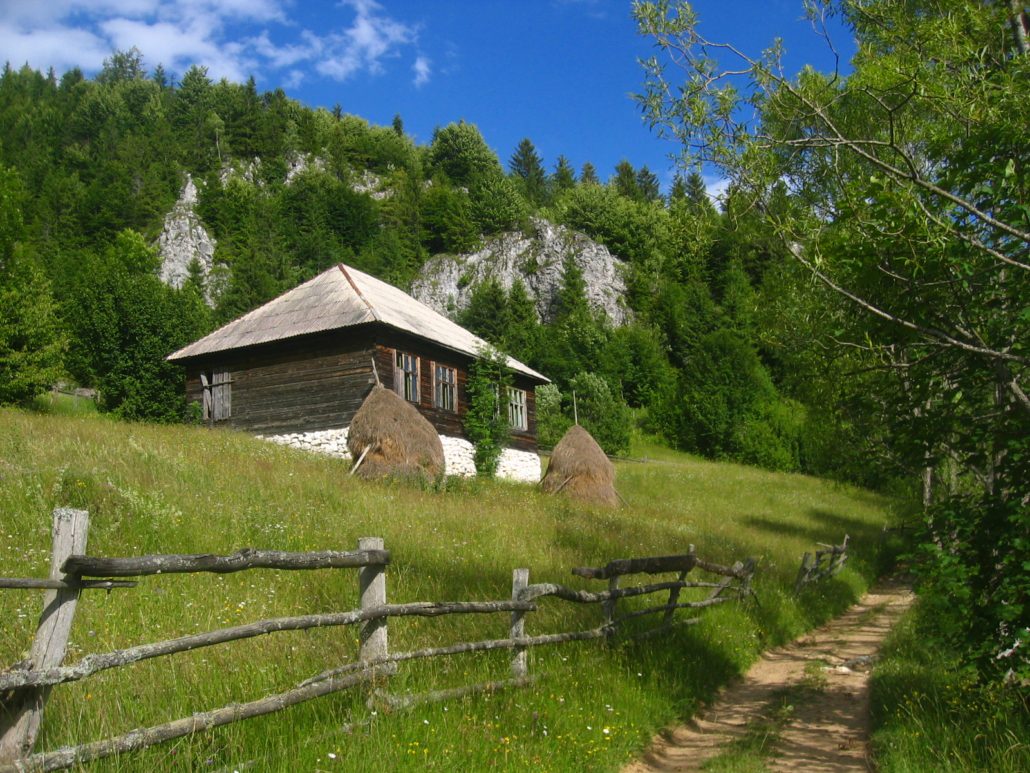
Trekking in the Apuseni Mountains in Romania

Trekking in the Apuseni Mountains in Romania

The Western Carpathians formation South – West of Cluj-Napoca are generally known as Apuseni Mountains although they contain many ranges and Apuseni Mountains and Natural Park is only a small part of it in the South.

Nevertheless, these mountains have a special appeal for outdoor lovers being one of the most popular hiking destinations in Transylvania, Romania. The Carpathian mountains have many natural attractions among which numerous caves (400, to be more precise) including glacial caves like Scarisoara Cave, karstic landscapes ideal for via ferrata and rock climbing, breathtaking waterfalls and beautiful picturesque valleys.

There are many scenic routes that you can wander on in Apuseni National Park, but also plenty of places to rest and relax. Given that the area is densely populated and quite well developed, there are many accommodation options to choose from in small villages like Marisel, Rachitele or Garda de Jos.

Besides having an easy starting point for your hikes, you’ll get a feel of the local Carpathian community by staying in traditional guesthouses, eating home-grown products and immersing yourself in Romanian culture and traditions.
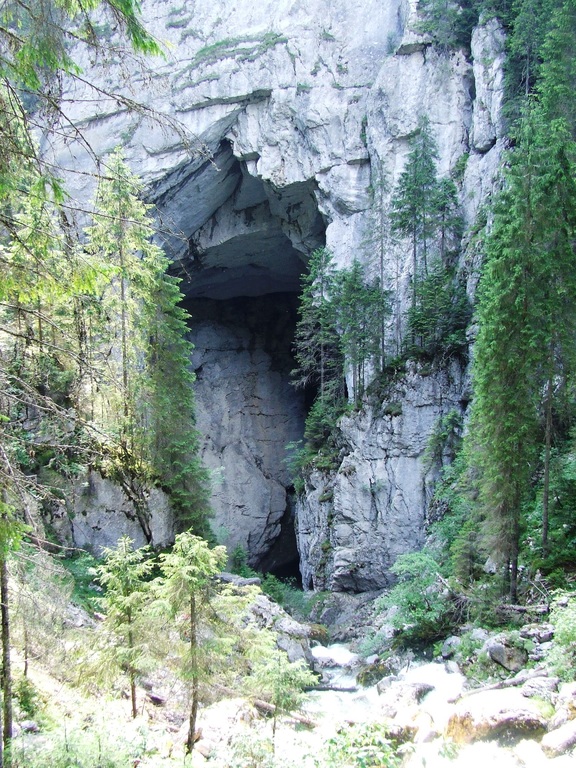
Cetațile Ponorului in the Apuseni Mountains

Cetațile Ponorului in the Apuseni Mountains

Cetațile Ponorului, Lumea Pierdut, Padis Plateau or Cascada Bulbuci are just some of the famous natural attractions that you shouldn’t miss on your trip to Apuseni mountains. If you want to see all of them we recommend hiring a hiking guide who can also transfer you by car between areas as otherwise you would need 8-10 days to explore the entire region and see all these beautiful sights.

Also, if you happen to reach Vladeasa massif, make sure to check out Pietrele Albe, a fascinating limestone complex situated near Rachitele village.

A Note About Safety when Hiking in Romania

Wherever you choose to go on your hiking or backpacking trip in Romania, make sure to be prepared and do your homework. Hiking infrastructure is not very well developed with few signs or maps in English and few accommodation options deep in the mountains.

To ensure you have a great hiking experience in Romania, be sure to get the AllTrails app before you go. The app has an extensive list of the best hiking trails in Romania, with reviews from other hikers to keep you up to date on the latest trail conditions. You can filter by trail difficulty, length, and suitability and download trail maps to help keep you on track even when you’re offline.

Also, Romania is home to the largest brown bear population in Europe and many other wildlife so if you’re planning to go hiking in Romania on your own, consider taking a pepper spray with you or hiring a guide who knows what to do in these unexpected encounters.
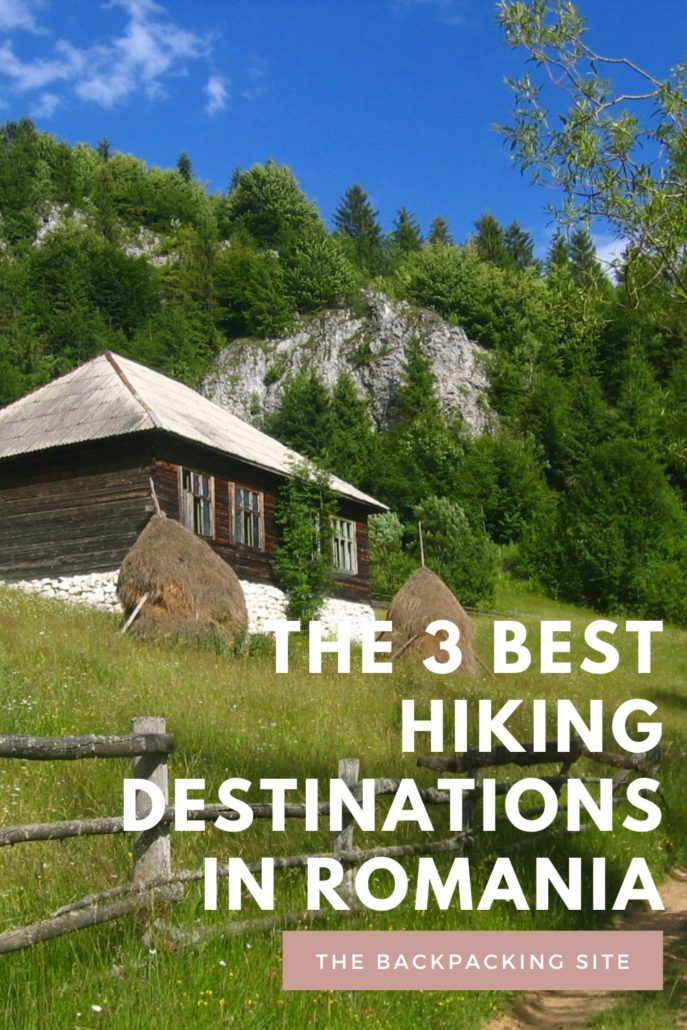
 

Pin The Best Hiking Destinations in Romania
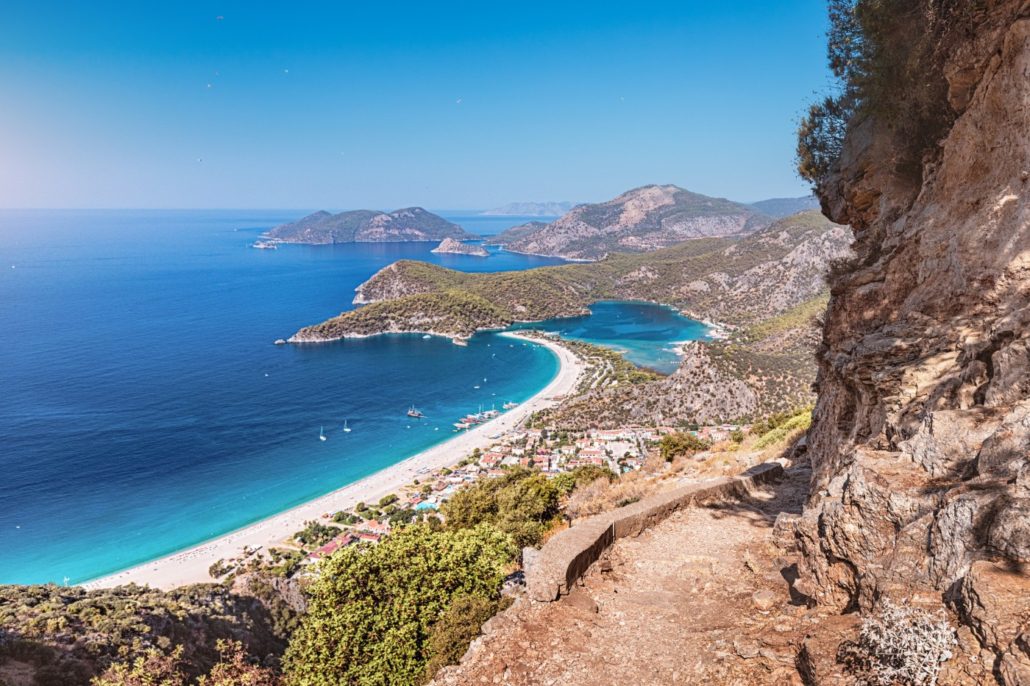
Pin The Best Hiking Destinations in Romania
While hiking in Antalya, Turkey, you’ll experience spectacular landscape views of beaches, mountains, canyons, lakes, and national parks. The Antalya province is home to the Tarsus Mountain range and the Mediterranean coast, making it a hiking lover’s dream.

No matter which of these hikes in Turkey you choose, you’ll have dramatic mountain views and the sparkling blue water of the Mediterranean at every turn. We created the guide to hiking in Antalya to share the best hiking locations on the Mediterranean coast in Turkey.

The best time to hike in Antalya is March to May or September to November when the weather is mild. You will find the summer months in the Mediterranean region are hot and humid with the winter months bringing the rainy season. For optimal conditions, Spring and Fall are the best times to enjoy hiking in Turkey.

To ensure you have a great hiking experience in Turkey, be sure to get the AllTrails app before you go. The app has an extensive list of the best hiking trails, with reviews from other hikers to keep you up to date on the latest trail conditions. You can filter by trail difficulty, length, and suitability and download trail maps to help keep you on track even when you’re offline.

Next, we’ll look at some of the most popular hikes in Antalya.

Lycian Way

Breathtaking views on the Lycian Way while hiking in Antalya

Breathtaking views on the Lycian Way

The Lycian Way is one of Turkey’s most popular long-distance hikes through the mountains in Turkey just inland of the Mediterranean coast. It’s a 540-kilometer cultural trail from Antalya to Fethiye and can take around 30 days to complete in its entirety.

Typically, hikers will start in Fethiye, but you can start the hike from whichever place you want to. The route connects Lycian ruins, coastal beach towns, nomadic footpaths, and ancient Roman roads. From Antalya, the trail starts in the mountains at Geyikbayiri.

In addition, the trail has 17 segments that you can hike individually. You’ll find some of the best partial hiking routes of the Lycian Way around the beach towns of Patara, Kalkan, or Kas. Hiking the Lycian Way promises breathtaking views and great adventures along the way.

Termessos

"Visit

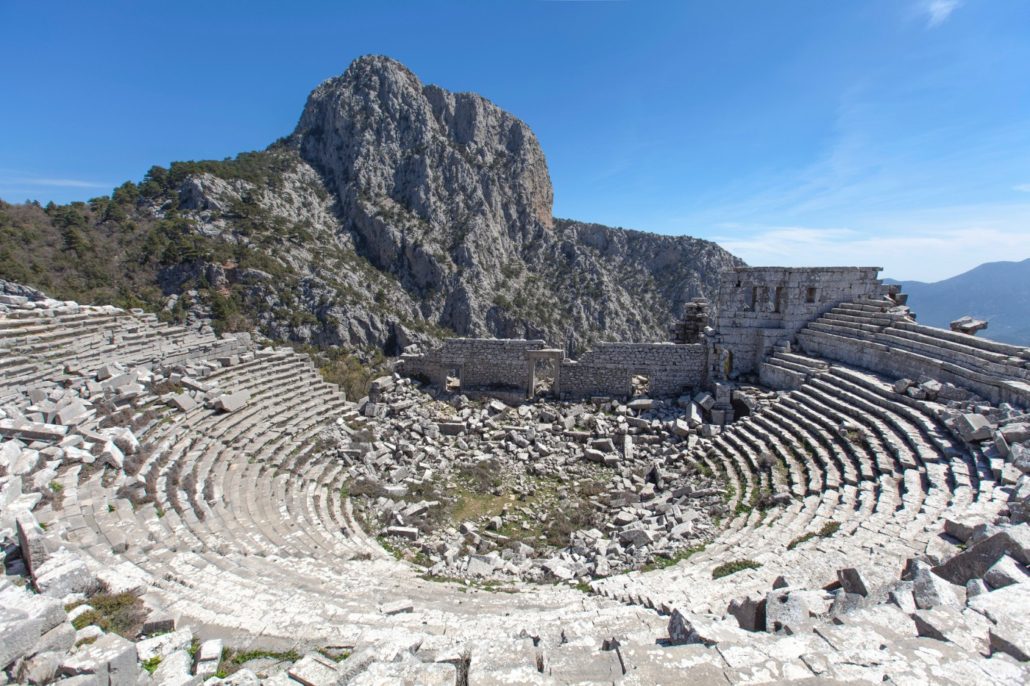
One of the best hikes in Antalya is up to the ancient city of Termessos at the top of Mount Solymos. Access the trail at the Gulluk Dagi National Park, about 30km from the Antalya city center. Drive up to the trailhead to park, then you can take off up the path to the top.

The trail is steep and rocky and takes about 45 minutes to an hour to get to the 1,000-meter mountain top view. You’ll have views of the Taurus Mountain range and get to explore the archeological site with an impressive great theater that boasts views of the sea and mountains. There are trails all through the ancient site and along the mountain. Plan on 4 to 5 hours to hike and explore the site. Be sure to take water and snacks with you.

Tazi Canyon

Tazi Canyon, also called Eagle Canyon, is a hike in Antalya in Koprulugu Canyon National Park that you do not want to miss. The hiking path is difficult in some places, being rocky with some larger boulders to climb over.

Along the 11km hike, you’ll see plenty of wildlife and many different species of plants. You’ll have breathtaking views from the top of the canyon with the cliffs dropping a steep 400 meters. Be sure to bring water, snacks, and your camera.

Goynuk Canyon

Hiking in Antalya isn’t complete until you’ve visited Goynuk Canyon where you can enjoy hiking or canyoning. The trail is 3km long with the highest point being 1km into the hike. It’s a beautiful hike surrounded by pine trees and the sound of the river. There is a lake at the end of the trail where you can take a break and enjoy the ice-cold water, especially on a hot day. This is an easy hike for beginners with stunning views of the mountains, canyon, and river.

St. Paul Trail

The St. Paul Trail is thought to be one of the oldest paths for hiking in Antalya, stretching over 500 km taking approximately 27 days to hike. The trail is made up of old Roman roads and forest trails.

The hike starts in the Perge and follows the footsteps of the Apostle Paul to the ancient city of Antioch. The trail is marked along the way with options for village houses or pensions to stay in. Subsequently, on longer stretches of the hike, you will have to camp.

Kas to Limanagzi Bay

This is about a 2-hour hike of the Lycian Way that takes you to Limangazi Beach which can only be reached by hiking or a water taxi from Kas Harbor. As you’re hiking on the trail, you’ll come up to a split in the trail leading to the beach.

If you take the cliff route, it’s steep and would not be safe if you’re carrying a heavy pack or if you had rough weather. The views from the cliff path are fantastic and well worth the winding path along the cliffs. Alternately, if you take the inland path, you’ll pass by ancient ruins along the way to the beach.

Most importantly, bring your swimsuit to swim in the sea once you arrive. There are local cafes on-site where you can enjoy breakfast or lunch before heading back. If you do not want to hike back, you can catch a ride back to Kas on a shuttle boat.

Mt. Tahtahli (Olympos)

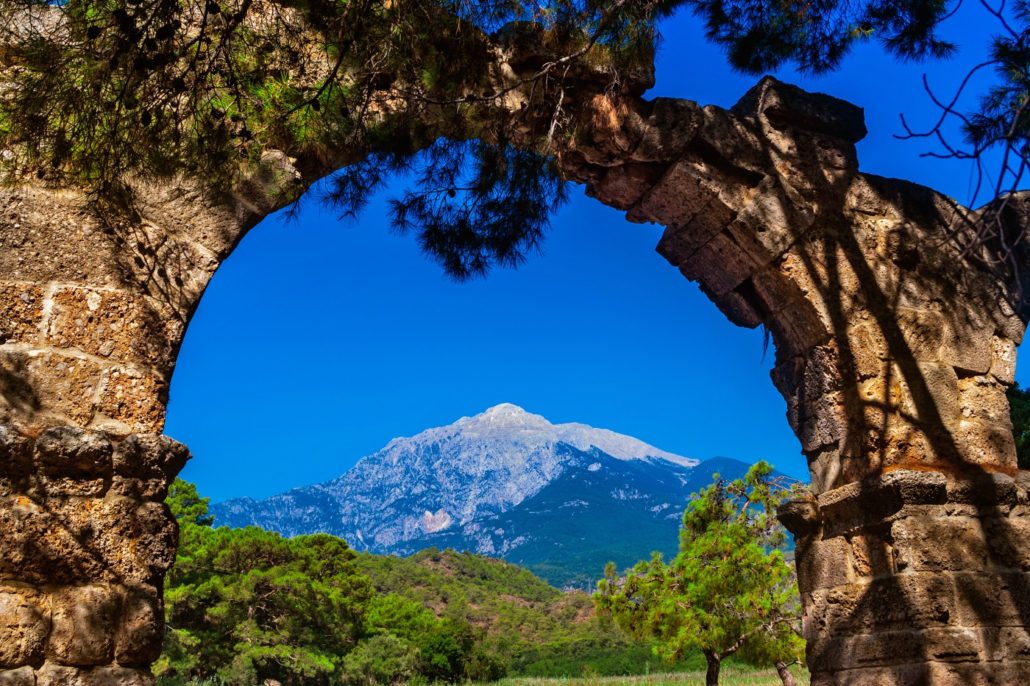
Snow-capped Mt. Tahtahli in the distance. One of the best hikes in Antalya

Snow-capped Mt. Tahtahli in the distance

Mt. Tahtalhli is the steepest trek in Antalya along the Mediterranean coast. Start the hike from Kemer and head straight up the mountain to the 2,365-meter summit. The hike is challenging and takes a little over 7 hours to complete, so start early and bring plenty of food and water.

From the top of Mt. Tahtali, enjoy awe-inspiring views of the Antalya mountains and the Mediterranean Sea. Afterward, you can hike down the mountain or take a 10-minute ride down to the mountain base in a cable car.

Saklikent Gorge

Other-worldy Saklikent Gorge

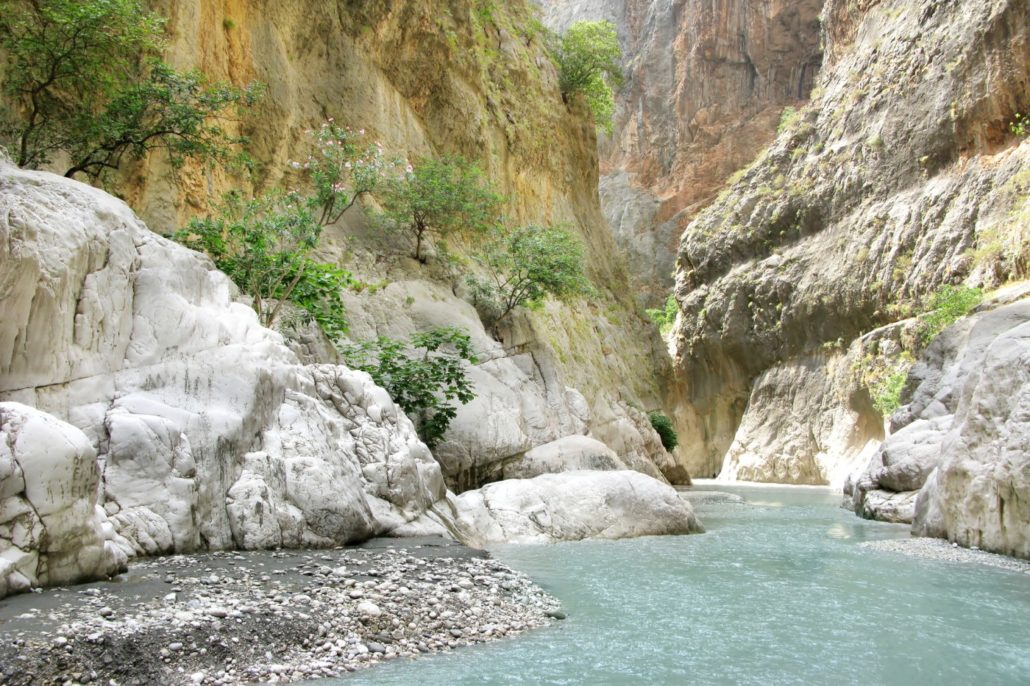
Saklikent Gorge near Antalya

Saklikent Gorge is an hour from Fehtiye in Saklikent National Park in the mountains of Turkey. The gorge is in the Tarsus Mountains and is considered the 3rd largest canyon in Europe, stretching 18km and 300m deep.

The path is narrow and follows along the river. At times there will be times that you will walk through the water on your hike, so wear footwear that can be submerged in water along the way. If you want to take the high road, there are boardwalk routes available to stay above the water.

The best views are past the first river crossing. Sometimes that path is wide, sometimes so narrow you must climb over boulders to pass through. While hiking you’ll see the natural beauty of the canyon as it climbs up to 720 meters tall, icy cold mountain water, waterfalls and pine trees that cover the mountain range above. This is a great hike during the summer when it is hot outside. You can enjoy the cooler air in the canyon and take a dip in the water.

Eternal Flame of Chimaira

In the village of Cirali, you’ll find a well-known trail for hiking in Antalya, the eternal flames of Mt. Chimaira. There are several places where flames burn straight from the rocks up on the hill.

The hike starts at the ruins of Yanartas at the bottom of the mountain. You can drive back to the entrance or walk from the beach. You will pay a minimal entrance fee to hike up to the flames. The 2 km trek has a nice dirt path but is steep in places with places to stop and rest as needed.

You’ll have great views of Cirali beach and the Mediterranean Sea as you make your way up the trail. You’ll need about 2-3 hours to hike in to explore and then back down to the entrance.

Sapadere Canyon

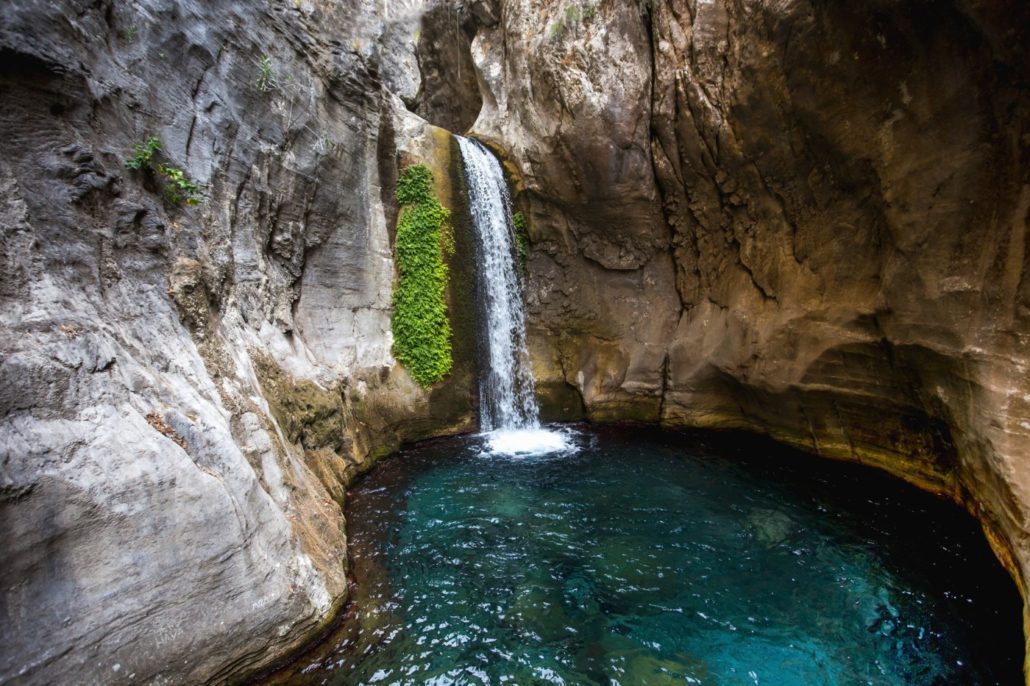
Sapadere Canyon Waterfall

Sapadere Canyon Waterfall

The Sapadere Canyon hiking trail is in the mountains of Turkey with rewarding mountain views, waterfalls, and natural pools at the end of the trail. It’s an easy 30-minute hike to reach the village of Sapadere, where you’ll see plenty of wildlife, local plants, mountains and the river.

When you reach the end of the trail, you can jump into the ice-cold water of the waterfall pools to cool off. There are several cafes where you can enjoy tea or have a simple lunch.

Final Thoughts on Hiking in Antalya

Ultimately, you cannot go wrong hiking in Antalya with the picturesque views of the mountains and the Mediterranean Sea. Enjoy hiking through canyons, Antalya mountains and the coastal trails to experience the culture, history and beauty of Turkey.

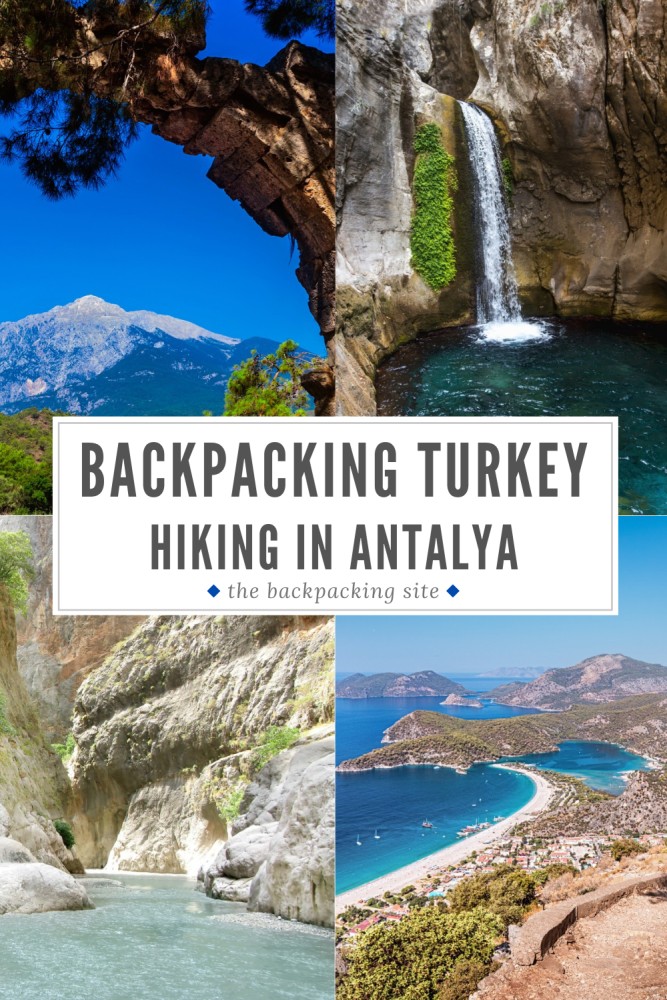
Hiking in Antalya: Best Hikes in Turkey

Pin me!


Hiking in Antalya

Pin me!

The Black Forest is an expansive area of lush green mountains in the state of Baden-Württemberg in the southwest of Germany. The Black Forest is known for its dense forests of dark fir trees, picturesque villages and traditional spa towns. It’s one of the most scenic regions in Germany, giving inspiration to many of the Grimm Brothers’ fairy tales.  

Setting off on foot is the best way to experience the Black Forest and there are many hiking trails to explore. Whether you’re a novice hiker or prefer challenging multi-day hikes, the Black Forest has plenty of beautiful places for everyone to enjoy.  

Before you set foot on the hiking trails, here are a few things to know before you go to help you plan your trip to Germany’s beautiful Black Forest. 

Where is the best place to stay in the Black Forest?

There are many beautiful locations within the Black Forest that make great places to base yourself to explore the area. 

Baden-Baden in the north of the region is one of the most popular areas to stay in the Black Forest. Here you’ll find plenty of cafes and restaurants, spas and high-end hotels. Another popular place to stay in the Black Forest is the city of Freiburg im Breisgau. Freiburg is a vibrant university town in the south of the Black Forest, with lots of accommodation options to suit all budgets. 

If you’re looking for a more peaceful visit to the Black Forest, there are many smaller towns and villages throughout the region. Popular choices are Wolfach, Triberg, Rottweil and Calw, where you can find traditional German guesthouses and plenty of holiday apartments and cottages to rent. 

A top tip for choosing where to stay in the Black Forest is to plan which hiking trails and activities you want to do first. Then you can choose an area to base yourself, which is close by to the sights on your itinerary. While traveling in Germany, the best way to find accommodation is with booking.com, which has different types of accommodation ranging from guest houses, to private apartments, to hostels. The site has filters for budget, guest rating, and amenities so that you can find something that fits your specific preferences.

Getting to and around the Black Forest

By plane If you’re arriving into Germany by plane, the closest airports are Karlsruhe, Stuttgart or Frankfurt. From there, you can rent a car and drive to the Black Forest. Use Skyscanner to compare flights and find the best deal.

By bus /train – The cities of Baden-Baden in the north and Freiburg im Breisgau in the south can be reached by train or bus from elsewhere in Germany, however once you arrive, it is best to rent a car to explore the Black Forest. When traveling by train or long-distance bus, you can use Omio to compare different options and find the best one for you.

By car – Having your own car is by far the best way to explore the Black Forest. Public transport is extremely limited, especially when reaching some of the hiking trails and having your own car will give you flexibility to explore at your own pace. Plus, the roads in the Black Forest are really scenic, making for a beautiful drive. If you decide to rent a car, check out Discover Cars for the best deals in Germany.

Top tips for hiking in the Black Forest

  • Take a map and plan your route! This sounds obvious, but not all trails are clearly sign-posted, so make sure that you have a good map and decide on your route before setting off. The AllTrails app has an extensive list of the best trails for hiking in the Black Forest, with reviews from other hikers to keep you up to date on the latest trail conditions. You can filter by trail difficulty, length, and suitability and download trail maps to help keep you on track even when you’re offline.
  • Wear sturdy hiking shoes or boots – the ground on many of the trails can be uneven in places and may be slippery close to waterfalls, or after rain
  • Wear layers! Even on a sunny day, the temperature in the Black Forest can often feel cool, as the thick forest of tall trees blocks out the sun’s rays
  • Take plenty of water and snacks –  there are not many places to buy drinks or snacks out on the hiking trails, so be prepared and bring your own – just remember to leave no trace

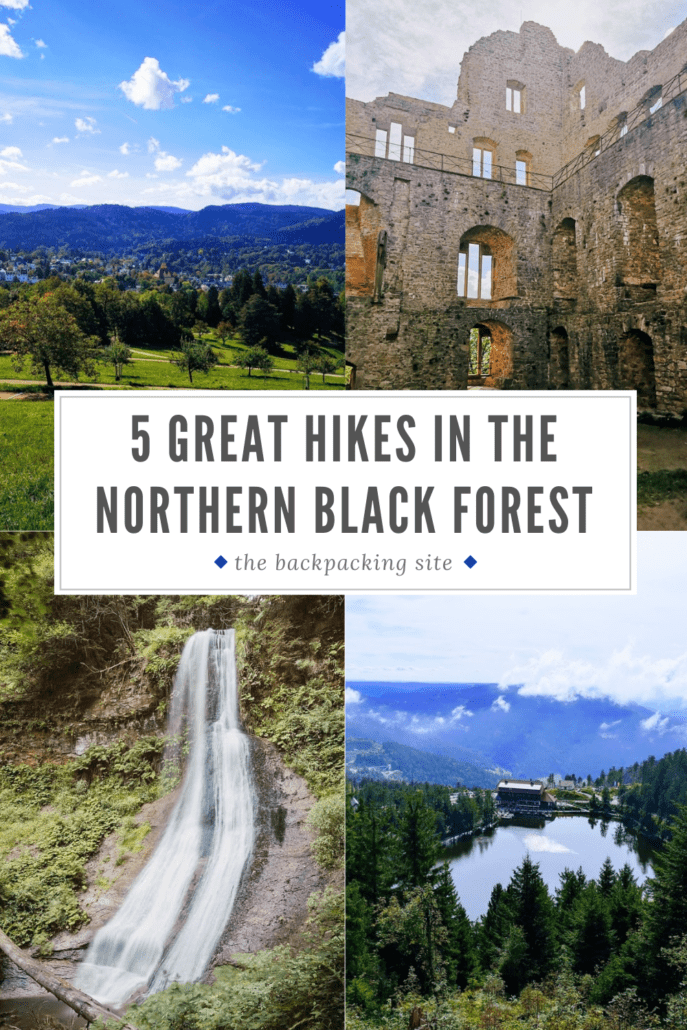
5 Great hikes in the Northern Black Forest

There are so many beautiful places in the Black Forest and plenty of scenic hiking trails to discover. This post will focus on 5 great hikes in the northern Black Forest, however if you are heading to the south of the region on your trip too, make sure that you visit the Triberg waterfalls – the tallest waterfalls in the Black Forest, and take a trip to Lake Titisee, where you can try out windsurfing or sailing. 

1. Mummelsee to Hornigsrinde hike

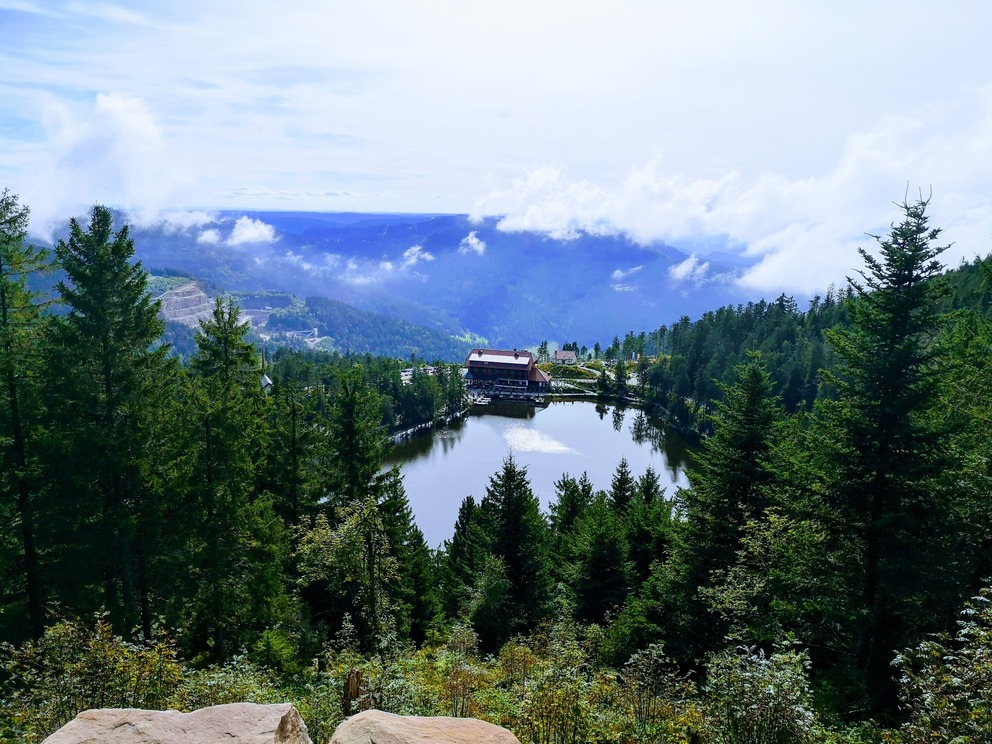
Looking down to Mummselsee from the Mummselseeblick viewpoint

Looking down to Mummselsee from the Mummselseeblick viewpoint

The views on the hike from Mummelsee to Hornigsrinde are some of the best in the Black Forest, making it a popular route. You won’t be the only ones hiking this trail, but the scenery is really beautiful and this hike is worth adding to your Black Forest itinerary. 

  • Distance: 4km 
  • Duration: 1-2 hours (depending on how many stops you take along the way) 
  • Type: Loop trail
  • Difficulty: Easy

Mummselsee is a small lake, conveniently located off the Black Forest high road in the north of the region. It’s one of the most popular attractions in the Black Forest and whilst there are several hiking trails around the lake, one of the best routes is from Mummelsee to Hornigsrinde. The Hornigsrinde is the tallest mountain in the Black Forest. There are several trails which incorporate both Mummelsee and the Hornigsrinde, but one of the easiest is the 4km loop trail, starting from Mummelsee car park. 

The route: 

From the car park at Mummelsee, take the trail past the Berghotel behind the lake towards Mummelseeblick – a viewpoint with gorgeous views down to the lake. From this viewpoint, the trail continues to Hornisgrindeturm, an observation tower sitting next to a small cafe where you can enjoy lunch or a drink with panoramic views. Leaving the cafe behind, continue on the path through the moorland towards the ridge of the Hornigsrinde.

Spanning for 2km, the ridge of the Hornigsrinde creates a plateau of pretty meadowland on top of the mountain. Climb the small Birmarck observation tower in the centre of the plateau for beautiful 360 degree views over the surrounding landscapes. From here, you can return the same way you came, or to complete the full 4km loop, follow the trail along a wooden boardwalk through the forest to Dreifurstenstein – a historic triangular border stone. Continue to follow the path through the woodland until you eventually emerge back at the Black Forest high road and alongside the lake. 

2. All Saints (Allerheiligen) waterfall to All Saints Abbey hike

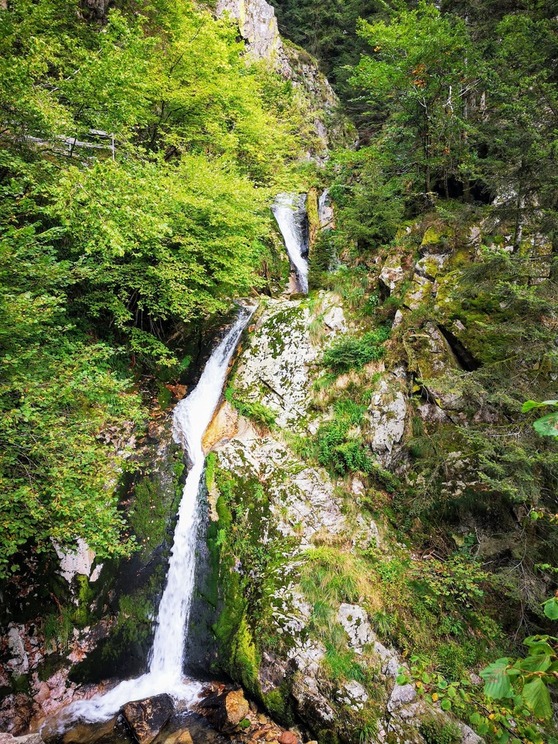
Allerheiligen Waterfall in the Black Forest

Allerheiligen Waterfall

The All Saints waterfalls are one of the best things to see in the northern Black Forest and it’s a great way to spend a couple of hours. This is a great hike for families too, just be careful as some of the boardwalks can be slippery. 

  • Distance: 3km (total)
  • Duration: 1 hour
  • Type: Out and back trail
  • Difficulty: Easy – moderate (due to the number of steep steps)

With a drop of 90m, the All Saints waterfall is one of the highest waterfalls in the state of Baden-Württemberg and a must-visit when in the northern Black Forest. On your hike here, you will pass the 7 cascades of the waterfall and follow the stream to the ruins of an old monastery. 

This is a short hike and is a great way to spend the morning or afternoon and combine it with a visit to another area of the Black Forest.

The route: 

The walk starts from the main entrance car park of the All Saints waterfall and parking here is free. Opposite the parking lot, you will see a large wooden gate with the sign ‘Allerheiligen Wasserfälle’ – this is where the trail begins. 

You will only have to walk about 400m before you get your first glimpses of the waterfall. The path through the forest is paved and there are several sections of steep wooden stairs to climb up as you ascend alongside the waterfall. 

Once you arrive at the top of the waterfall, you will leave the forest behind you and find yourself walking towards the small landscaped garden of the All Saints monastery. On the opposite side of the path is a war memorial, dedicated to all those who gave their lives to the first and second world war. 

Just a short distance ahead, you will arrive at the ruins of the old All Saints monastery. The monastery was built in the early 13th century and was lived in by monks up until it was destroyed in 1804 when it was struck by lightning. Now, only ruined sections of the monastery walls and tower remain. 

Next to the monastery is a small cafe, as well as toilets. Break up your walk with a refreshment stop in beautiful surroundings. To get back to the car park, simply retrace your steps back down past the waterfall. 

3. The Baden-Baden Panorama trail  (Panoramaweg)

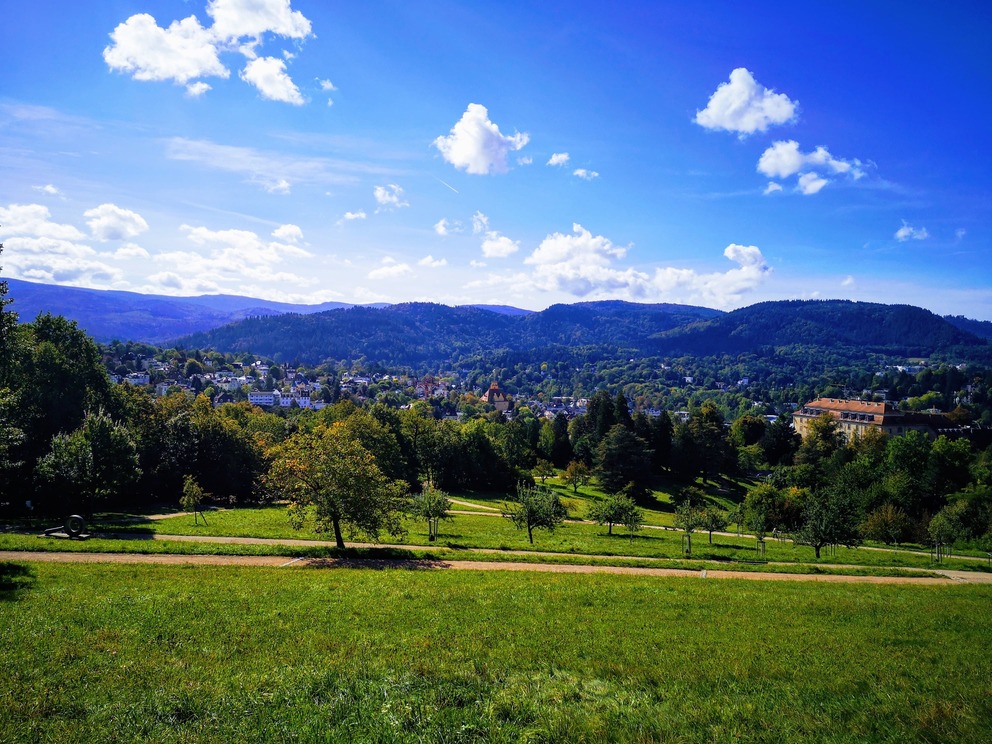
Views over Baden-Baden from the Weisser Stein viewpoint on the edge of the town

Views over Baden-Baden from the Weisser Stein viewpoint on the edge of the town

Hiking the Panorama trail is one of the best things to do if you are staying in the area of Baden-Baden or in the north of the Black Forest. The great thing about this hike is that you can tailor it to suit you. Either complete all 4 sections, or take just 1 or 2. Children will love exploring the ruins of Hohenbaden castle and the Battert nature reserve, making the stage 1 of the Panorama trail great for families too. 

  • Distance: 45km (split over 4 stages)
  • Duration: 12 hours
  • Type: Loop trail
  • Difficulty: Moderate (depending on how many stages you complete)

The Panorama trail is a long distance hike around the town of Baden-Baden in the north of the Black Forest. It’s one of the most beautiful long distance hiking trails in Germany with stunning landscape views along the way. 

If a 45 km hike sounds like a bit too much, simply complete any of the 4 stages as individual point to point trails instead:

The route:

Stage 1 – Baden-Baden Kurhaus – Merkur cable car station (9km / 3 hours)

Stage 2 – Merkur cable car station – Forellenhof (9.1km / 3 hours)

Stage 3 – Forellenhof – Geroldsauer Mühle (14km / 4 hours)

Stage 4 – Geroldsauer Mühle – Trinkhalle (13km / 4 hours)

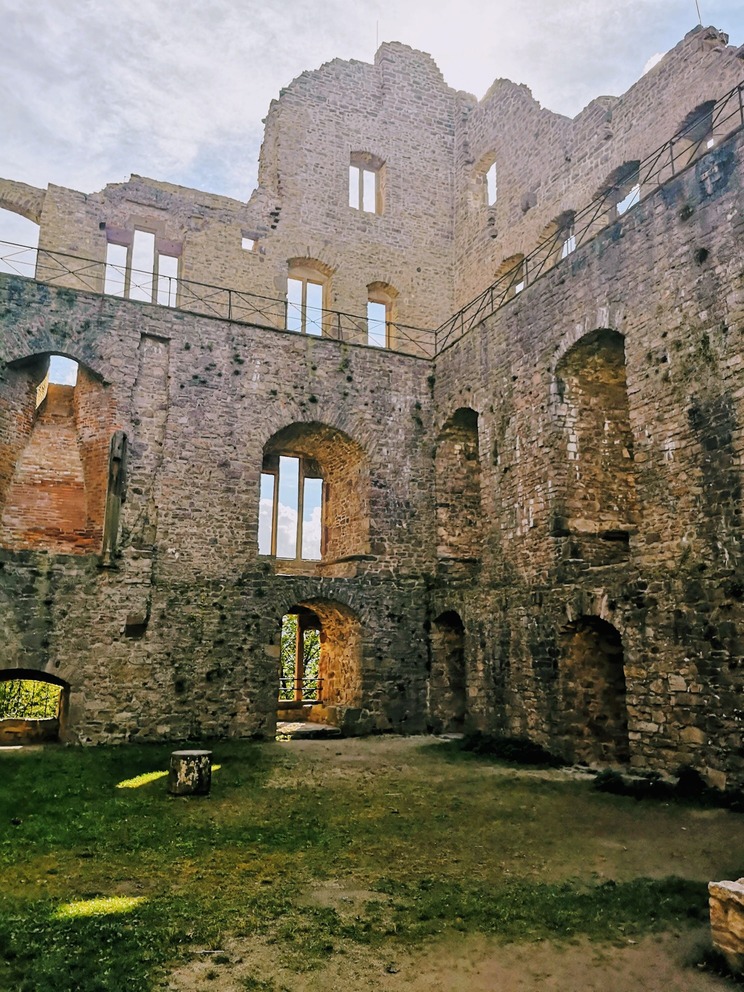
One of the most popular sections of the Panorama trail is stage 1, which begins in the town of Baden-Baden. This is a great section of the trail, with stunning views over Baden Baden town and the chance to explore the ruins of Hohenbaden Castle, with origins that go back to the 12th century. 

The ruins of Hohenbaden Castle on the Panorama trail

The ruins of Hohenbaden Castle on the Panorama trail

To start stage 1 of the Panorama trail, set off from the Kurhaus on the edge of Baden-Baden town and head towards the large park opposite. Walk to the Weisser Stein viewpoint on the top of the hill for lovely views over Baden-Baden town. From here, follow a track through a small forest leading up to Hohenbaden Castle. Take some time here to enjoy a drink at the cafe and explore the castle ruins, climbing the tower for gorgeous views of the surrounding area.

At Hohenbaden Castle, you have the option to head back down into Baden-Baden town for a shorter hike, or to complete the full 9km of stage 1, follow the trail through the dense forest of Battert nature reserve. Stop at Ritterplatte and Felsenbrücke observation decks in the nature reserve for beautiful views over the Baden-Baden landscape. Leaving the forest behind, you will pass Wolfsschulucht, where you can stop for lunch in one of the restaurants, before arriving at Merkur cable car station and the end of stage 1 of the Panorama trail. After you have finished your walk, you can take the funicular from Merkur station to the peak of Merkur mountain to get one of the best views in the region. 

4. Ruhestein to Wildersee hike

The thick forest of the Wildersee - Hornigsrinde nature reserve, near Ruhestein

The thick forest of the Wildersee – Hornigsrinde nature reserve, near Ruhestein

The Ruhestein to Wildersee hike is best enjoyed in the spring and summer months, when the ground is drier. The descent down to the lake is quite steep and narrow, so caution and good walking shoes are recommended. 

  • Distance: 8km 
  • Duration: 3 hours
  • Type: Loop trail
  • Difficulty: Easy

The area between Ruhestein and Wildersee sits in the centre of the Wildersee – Hornigsrinde nature reserve and is a very popular area within the Black Forest for hiking. This hike starts at Ruhestein and will take you through the protected forest of the nature reserve before arriving at Wildersee – one of the most beautiful cirque lakes in the north of the Black Forest. 

The route: 

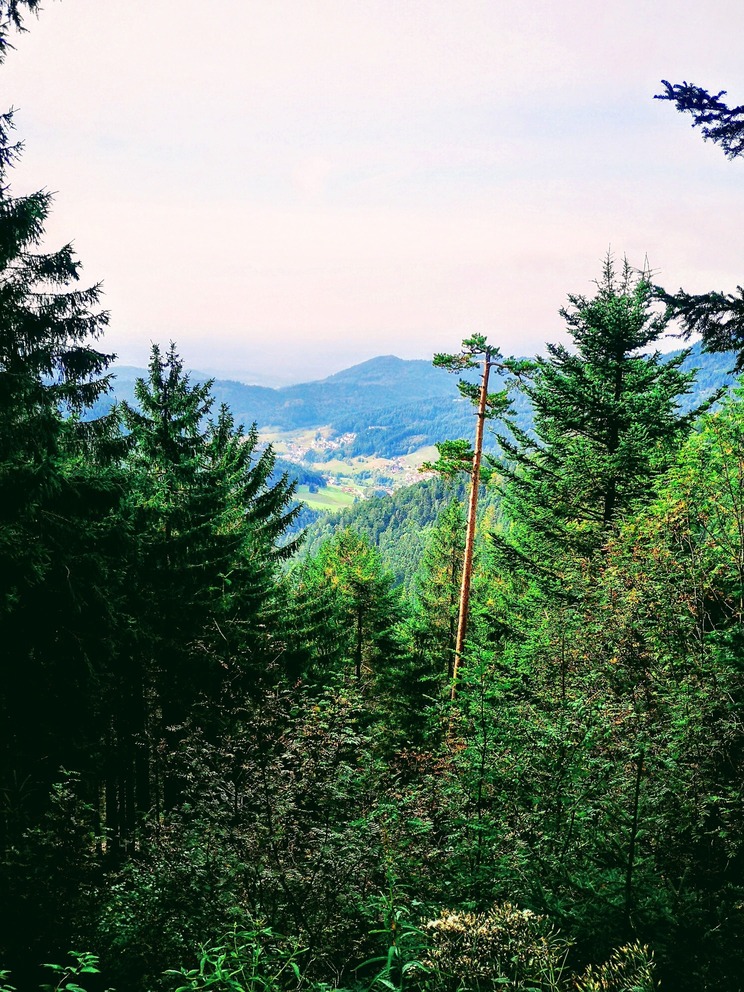
Start at the National Park centre at Ruhestein, here you will find several large car parks, toilets and cafes. (In the winter, there is also a ski slope which runs here). To start the hike, you will need to walk up and over the ski slope (if you’re in luck, and the chair lift is running, you can save your energy and take the chair lift to the top!) Once you’re at the top, you will have pretty views down over the valley, continue to follow the gravel path round to the right and get your first glimpse of Wildersee through the trees. The path then forks and turns steeply right again, guiding you through the thick, protected forest, down towards the lake. Stop here for a rest by the edge of the lake and enjoy the beautiful surroundings.

Leaving the lake, you can either continue following the path round the edge of the lake and up to Falzhütte and Bannwald before completing the full 8km loop back at Ruhestein. Or, if you prefer, you can retrace your steps and go back the way you came. Whichever route back you choose, you can detour to the Darmstädter Hütte – a rustic hotel which has a restaurant and bar open to visitors. 

5. Sankenbachsee and Sankenbach Waterfall hike

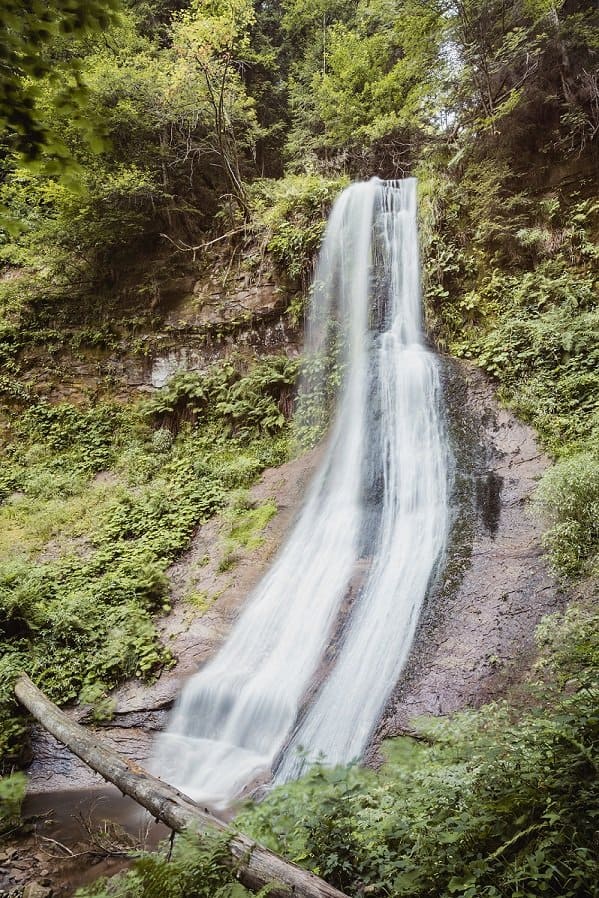
Sankenbachfall - photo by Stefan Kuhn

Sankenbachfall – photo by Stefan Kuhn

This interesting and easy trail is one of the best family hikes in the Black Forest. Combined with the facilities around the lake at Sankenbachsee, it makes for a great day out for families and those looking for a more laid back walking trail.

  • Distance: 7.5km (total)
  • Duration: 2 hours (allow for longer to enjoy time around the lake)
  • Type: Out and back
  • Difficulty: Easy

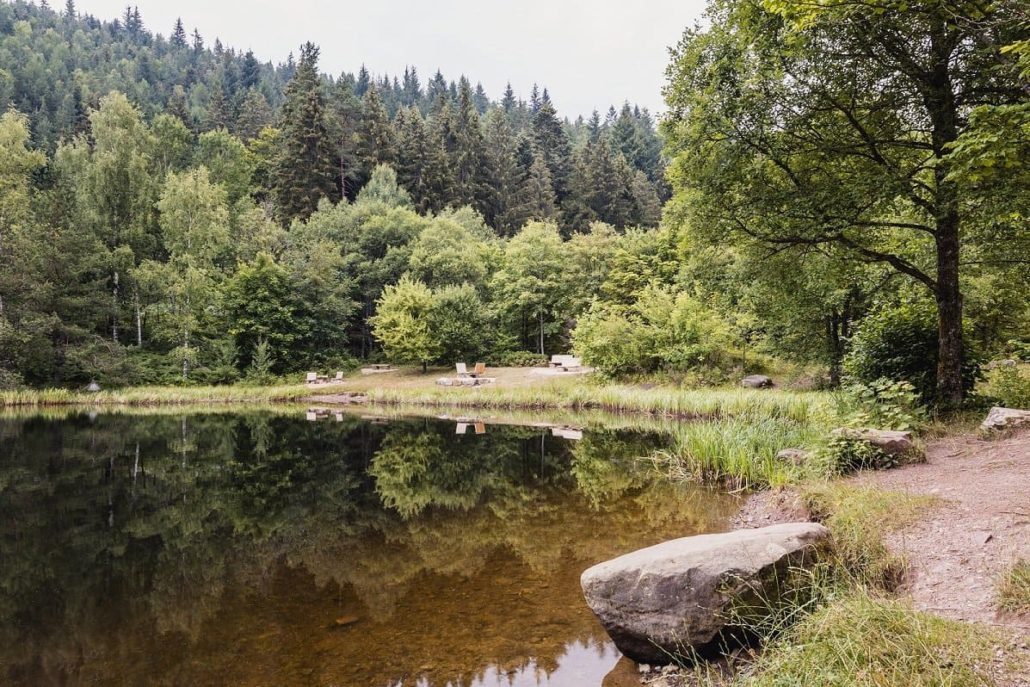
The Sankenbachsee is a beautiful cirque lake in the Black Forest. Unlike other cirque lakes in the area, swimming is permitted in Sankenbachsee and surrounding the lake is a playground, barbeque area, a deer park and also the Sankenbach waterfalls, making it a popular place for a family day out in the Black Forest. 

Sankenbachsee - photo by Stefan Kuhn

Sankenbachsee – photo by Stefan Kuhn

You can walk to Sankenbachsee from either Baiersbronn or Freudenstadt. This route follows the more straightforward trail from Baiersbronn. 

The route: 

Starting at the Sankenbachtal parking lot, near the ski lift in Baiersbronn, follow the signs for Sankenbachtal. A few minutes after starting, the gravel path will fork – keep left here and follow signs for Sankenbachsee. The path will guide you alongside a small stream and after about 1km, you will arrive at the Wildghedge car park for the deer park and nature reserve. (You can of course park here to shorten the walk if you wish). 

Continue following the path straight ahead through the nature reserve and after 1.8km you will arrive at the edge of Sankenbachsee. To reach the Sankenbach waterfall, follow the edge of the lake for about 15 minutes. At the base of the waterfall, you will find a barbeque area – the perfect setting for a picnic lunch! To get back to the start of your walk, simply retrace your steps and go back the same way.

5 Great short hikes in the Northern Black Forest, Germany

Pin 5 Great short hikes in the Northern Black Forest, Germany

Famous for its golden Pacific beaches and wild nightlife scenes, Cabo San Lucas is already a well-known popular tourist destination.

However the Mexican city offers much more than this, and especially for travellers who want to explore more of the authentic and cultural sites. With just a bit of effort it’s quite easy to find many hidden gems in Cabo San Lucas, which can range from heading on a local taco tour to going deep-sea fishing in the Pacific Ocean.

In this guide, we’ll explore some of the very best hidden gems of Cabo San Lucas, and how you can visit each one on your next trip here. We’ll also take a look at some of our very best tips for getting the most out of your trip here, as well as see why Cabo is worth visiting.

Is Cabo San Lucas Worth Visiting?

Regardless if you’re into bar-hopping, lounging on beautiful beaches, or prefer more of an adventure, Cabo San Lucas has it all in spades and even the most hard-to-please traveler will love it here.

Located right on the tip of the Baja California Sur peninsular of Mexico, it’s very accessible with its nearby international airport welcoming flights from all over the globe. This means it’s easy to hop over for a quick weekend from the USA, where we can enjoy great activities and lower prices.

Here we can find an almost unlimited range of awesome things to see and do. This includes visiting the legendary arch, swimming with sharks, hiking up Cerro de la Zeta and enjoying cocktails on Médano Beach. There’s also plenty of lesser-known and more hidden gems to experience too, which we’ll look at now.

Best Hidden Gems In Cabo San Lucas

Go Deep-Sea Fishing

Known as one of the best fishing spots in North America, Cabo is the perfect place to head on a fishing charter in the Pacific Ocean to try your luck. Here we can find all kinds of exotic fish species such as Mahi Mahi, Yellowfin Tuna as well as the legendary Blue Marlin. The best part is that you don’t need to be a pro, where experienced guides are on deck to help if you’re reeling in your first big catch. Whilst you can easily go at any time of the year with local Cabo fishing charters like Boats Baja, the very best months for fishing are between July and October.

Head On A Local Taco Tour

We all know that Mexican food is very tasty, and also that it easily ranks high as one of the best cuisines on the planet. In Cabo there are a tonne of restaurants to try various exotic dishes, however, there’s a way of going a step even further here – by joining a local taco tour. Juan More Taco runs a fun and novel way of exploring the local food scene, where we can try all kinds of popular street foods. The best part is that you’ll be heading with an experienced local guide, so you will be eating in safe and trusted places.

Hike Up Cerro De La Zeta

Looking to switch things up and really get outdoors? Then you’ll want to hike up Cerro de la Zeta, which is the mountain that lies just west of Cabo. Here we can get postcard-perfect views of the city and the surrounding Pacific Ocean, and it is especially good since it’s not yet such a popular activity for tourists. The hike up the 2km trail takes around an hour, and we suggest going in the mid-afternoon to avoid the hotter temperatures (and also so you can enjoy the picturesque red sunsets here).

Visit The Hidden Beach Of Playa Del Divorcio

The Mexican Pacific along Cabo San Lucas is famous for its stretch of beautiful golden sand beaches. Most head to either Médano Beach for its atmosphere or Chileno Beach for snorkelling, however, there’s also another great spot nearby. Playa del Divorcio is located close to the famous Arch rock formation, tucked away within the cliffs. Here you can enjoy perfect conditions for going snorkelling, and also a more relaxed and less crowded atmosphere (especially if you head early in the morning).

Learn To Cook Mexican Classics With A Cooking Class

Looking to go one step further than heading on a street food tour? Then consider taking an authentic cooking class when in Cabo San Lucas. Here we will get our hands dirty as we learn to create some of the most famous and mouth-watering Mexican dishes from scratch. Aside from being a fun way to change things up, you can also bring your own new skills back home to share with your friends and family. There are various cooking schools around the city, however we recommend joining a class with Cookin’ Cabo.

Our Top Tips For Visiting Cabo San Lucas

First of all, it’s important to consider the different seasons and when you are planning to visit Cabo San Lucas. The dry season (November until April) is the most popular, which is perfect for beach weather and little interruptions. The wet season (May until October) can sometimes have heavy showers and storms, but overall will be quieter and more authentic – which makes it a great time to catch exotic fish and also head on a luxury catamaran out on the Pacific Ocean..

Aside from visiting hidden gems, another great way of experiencing the more novel side of Cabo is to meet locals. Not only are the Cabeños very friendly people, they will also have some amazing recommendations for both avoiding the mainstream activities whilst also helping you get the most out of your trip here.

The city of Boston is one that encompasses many things; extensive history, impressive academics, world-class health care and that infamous thick accent that screenwriters across the country have come to know and love. While Boston is known for many “touristy” things, such as Faneuil Hall and the Freedom trail, there are so many other hidden gems in Boston that only locals typically frequent. 

While COVID-19 has affected us, like the rest of the world, Boston is opening its doors and the city is starting to come alive again.  As we are living in unprecedented times, please remember to follow any local COVID guidelines and double check to make sure everything is open prior to arrival!

Off the Beaten Path around Charles Street

In terms of restaurants and bars, some of Boston’s best kept secrets are in the heart of the city, right on Charles Street. Running down the middle of Beacon Hill, Charles Street is a quaint yet bustling street that connects down to the Boston Common.

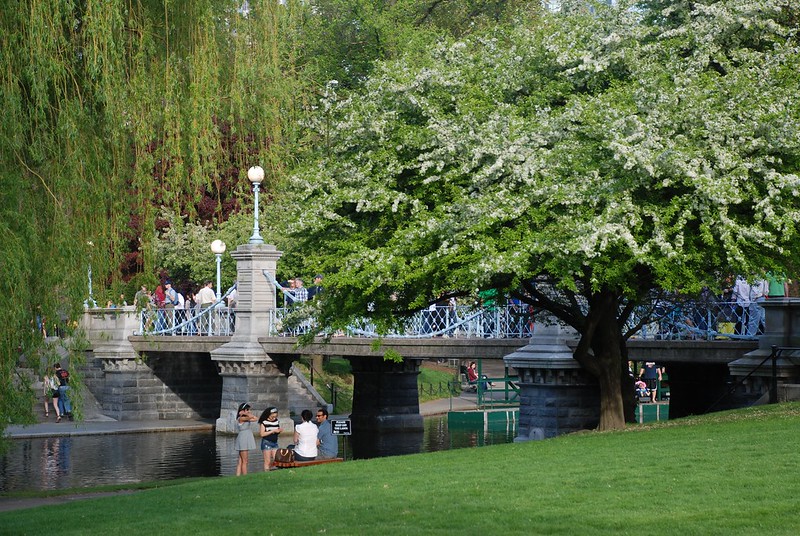
One of my favorite breakfast spots of all time is The Paramount. It’s a small place but be careful, it gets packed on the weekends so head there early. It’s cafeteria style, but the food is top notch. After grabbing breakfast there, you can head on down to the common and walk through the Boston Public Garden

Explore hidden gems around Boston Public Garden

The Boston Public Garden

If you’re looking for more of a true Boston bar in that area, then you have to stop at The Sevens, also on Charles Street. It’s a small bar that perfectly encompasses the intersection of dive bar and historical haunt, and is always overlooked by tourists. If you’re looking for one of those hidden gems in Boston with a true pub room feel, The Sevens definitely is a bar for you.

Exploring Around Newbury & Boylston Street

After exploring the area around Charles Street, you can head on over to Newbury and Boylston streets to do some shopping (window or otherwise), check out the Boston Marathon Finish Line and see the map room at the Boston Public Library

Hidden Gems in Boston: Newbury Street - eight blocks filled with salons, boutiques, and dining.

Boston’s Newbury Street – eight blocks filled with salons, boutiques, and dining.

If you’re exhausted from your shopping and want to grab some food or a drink, there are plenty of great spots along Newbury and Boylston. One of my favorites is Sonsie on Newbury. Sonsie is more of an upscale place but they have a cute bar with great food.

Boston overall is a very casual town though, so even “upscale” here really just means put on your jeans instead of your COVID-friendly sweatpants. Stephanie’s on Newbury also is great and has a cute front patio if you want to relax and people watch as well. 

Hidden Gems and Boston Harbor Views in the Seaport District

If you don’t want to get up early for breakfast, then starting your trip in the Seaport District is another great way to go. There they have the Barking Crab, which is a seafood restaurant with a unique atmospheric blend that’s casual, but with fantastic waterfront views.

Hidden Gems in Boston - The Barking Crab in the Seaport District

The Barking Crab in Boston’s Seaport District

Nearby is the Envoy Hotel which has more of a high class feel. There you can go to the roof and check out the Lookout Rooftop and Bar. While the drinks are on the pricier side, the scenery is gorgeous, and they even have COVID-approved igloos that you can rent as well.

In that area, you also can walk down the street to the rooftop at Legal Seafood, or you can get a true Boston experience by going to Harpoon Brewery for a brew tour and a few beers.

Breweries and Dive Bars off the Beaten Path in Boston

If our city’s watering holes are one of the reasons that brought you here, then look no further. Boston’s food scene is still up and coming, but our alcohol scene has been top level since the Revolution!

If you want a brewery feel in downtown, then I would suggest Trillium Brewery which has a Fort Point location and also has an outdoor spot in their Garden on the Greenway. They have great hazy IPAs and are typically rated some of the best beers in the country. 

If you’re looking to take more of a self-guided brewery tour, then I would suggest heading outside of downtown and going into the neighboring town of Somerville. There you can do your own “brew tour” and hit up places like Aeronaut, Remnant Brewing, and the Winter Hill Brewing Company. These places have more of a hipster vibe than the breweries downtown and also can tout some of the best hazy IPAs in the state. 

The Craft Beer Taps at Night Shift Brewery - Everett

The Craft Beer Taps at Night Shift Brewery – Everett

If you’re staying slightly outside the city, I also would always suggest checking out Nightshift in Everett. They have a great outdoor spot and often times have a lot of fun beers relating to classic 80s and 90s themes.

They too have a satellite location called Nightshift – Lovejoy Wharf, which is right near the TD Garden and is a perfect spot to stop at if you’re in town checking out a game.

To continue the fun after the game, look no further than Sullivan’s (Sully’s) right down the street from the garden. This is true dive bar atmosphere but is a perfect place if you’re not ready to go home after watching a good Bruins or Celtics game.

Hidden Gems in the Boston North End

Close to the Garden lies Faneuil Hall and Quincy Market. This you need to check off your list if you’re coming to Boston, but personally I feel like it’s over touristy and doesn’t really give you a glimpse into the city.

After making a quick pit stop there, head over to the city’s famous North End. If you can catch it on a feast day, which occur sporadically throughout the summer, then I would highly suggest checking it out. 

Walk through the city’s old cobblestoned narrow streets and experience our Little Italy, either with friends or on a date night. They have amazing restaurants there, my personal favorite being Bricco, which has incredible food and a dark moody, yet modern, atmosphere. Ristorante Fiore is also fantastic and has a beautiful roof deck for the summer months. 

The Improv Asylum is a great little comedy club right on Hanover Street and makes a perfect pairing with some good Italian food later in the night. After you’ve gone to dinner and checked out a comedy show, then you have to head over to the original Regina Pizzeria at 11 ½ Thatcher Street, just a few minutes’ walk from Hanover. The pizza is truly amazing and is perfect if you need a late-night snack.

Staying Active In Boston

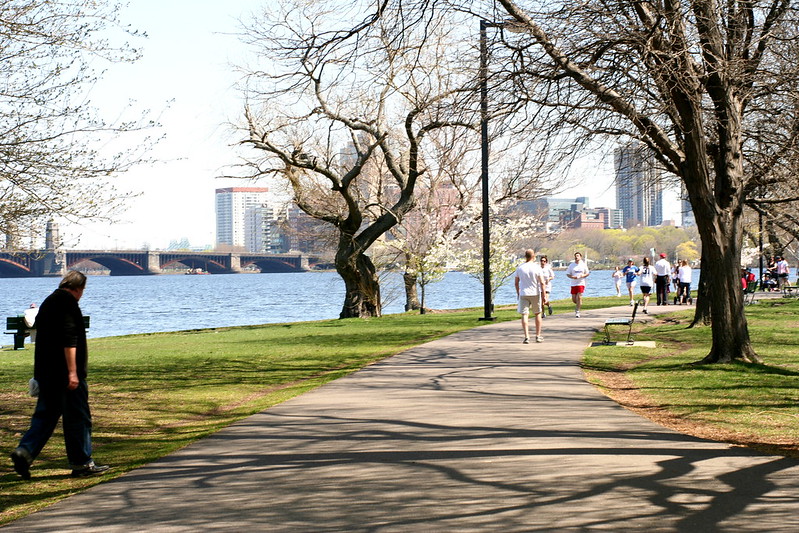
At this point, if you’ve drunk all you can drink and eaten all that you can eat, then I would suggest taking a walk along the Charles River Esplanade to burn off some of those calories.

It’s also a great place to bring a picnic and watch the sunset over the river if the weather is nice enough. Parking in that area can be difficult, but you can park at the Boston Common (along the Beacon Street side) and walk over. 

The Charles River Esplanade - A favorite spot for Boston locals

The Charles River Esplanade – A favorite spot for Boston locals

If you want more activity than just a casual stroll and don’t mind waking up early, then you have to check out the November Project. This is a great work out and is free, which is even better! All you need to do is show up.

They offer workouts Monday, Wednesday and Friday mornings at varying locations across the city. Typically, these workouts involve things like doing the stairs at Harvard Stadium or running hill sprints in Brookline. More information can be found on november-project.com and I highly recommend joining their community if fitness is top of your priority list!

If you want to do an activity that doesn’t involve acting like Rocky Balboa running up and down stairs, then check out Boda Borg which is a combination of an escape room and an obstacle course.

It’s fun and easy for all levels, perfect for an afternoon with friends. You also could bring your skates and go skating at the public rink in the North End which has a partial glass wall where you can see the harbor. 

Lastly, the city’s location in beautiful New England makes it a great jumping-off point for some amazing day hikes near Boston. This four-season guide includes 60 great trails in Eastern Massachusetts to help you get even further off the beaten path when visiting Boston.

Boston’s Lesser-Known Guided Tour

Now at this point, I don’t know about you, but I’d be pretty tuckered out and would want someone just to show me around. While the Duck Tours are the most popular tour of the city, I always recommend something a little spookier.

The Ghost and Gravestones tour of Boston is fantastic, albeit a little gimmicky. They give you a great tour of the city while also enlightening you to some of the spookier aspects of Boston, such as the Boston Strangler, the Great Molasses Flood and the ghosts of the revolution that haunt our streets. You’ll need to make reservations in advance, but I always suggest this as I feel like it’s a little more off the beaten path and a fun way to explore Boston.


Truly, Boston is an amazing town full of a lot of character, grit, and plenty of hidden gems. Of course, if this is your first time visiting, be sure to also take a look at the top things to do in Boston to make sure you’re not missing out! And if you’re heading to Boston from the Big Apple, check out Wanderu for bus options from from NYC to Boston.

The history here is fantastic and there are enough things to do in and around the city to last a lifetime.  Once you’ve been once, you’ll understand why we Bostonians think our city is “wicked” cool. Have fun! 


Hidden Gems in Boston – A Local Insider’s Guide